

Acutely ill? Call 113 in Norway. Out-of-hours service: 116 117.

Common cold

Do you need antibiotics for a cold?

Reviewed by a Norwegian GP 29 Oct 2026

Made with AI · Simplified illustration – not to scale

The key point

That's why antibiotics don't help. They attack bacteria,

In short

  • But the virus manages to latch onto a cell – and slips its genetic material inside.
  • Then the body fights back. White blood cells move in. The fever and the stuffy nose are your immune system at work – not the virus.
  • That's why antibiotics don't help. They attack bacteria, not viruses.
Norsk versjon

More films

2 films · more on the way

See all
Headache and migraine

Why does your head hurt so much?

In production

01 · Scenes

Come inside – the film scene by scene

Here is the whole film as text and pictures.

Colours in the film

  • Teal spheres: viruses
  • White glowing cells: white blood cells
  • Pink and red: the lining of the nose

The colours are an artistic device, not measurements.

  1. AI illustration: A fictional man sneezes on the bus. A tiny teal virus floats in one of the droplets.
    01 / 07

    One sneeze. Thousands of tiny droplets. In one of them: a cold virus.

    What you see: A fictional man sneezes on the bus. A tiny teal virus floats in one of the droplets.

    Simplified – see explanation ↓

  2. AI illustration: The droplet with the virus is drawn into the nose with a breath.
    02 / 07

    Someone breathes in – and the virus sails straight into the nose.

    What you see: The droplet with the virus is drawn into the nose with a breath.
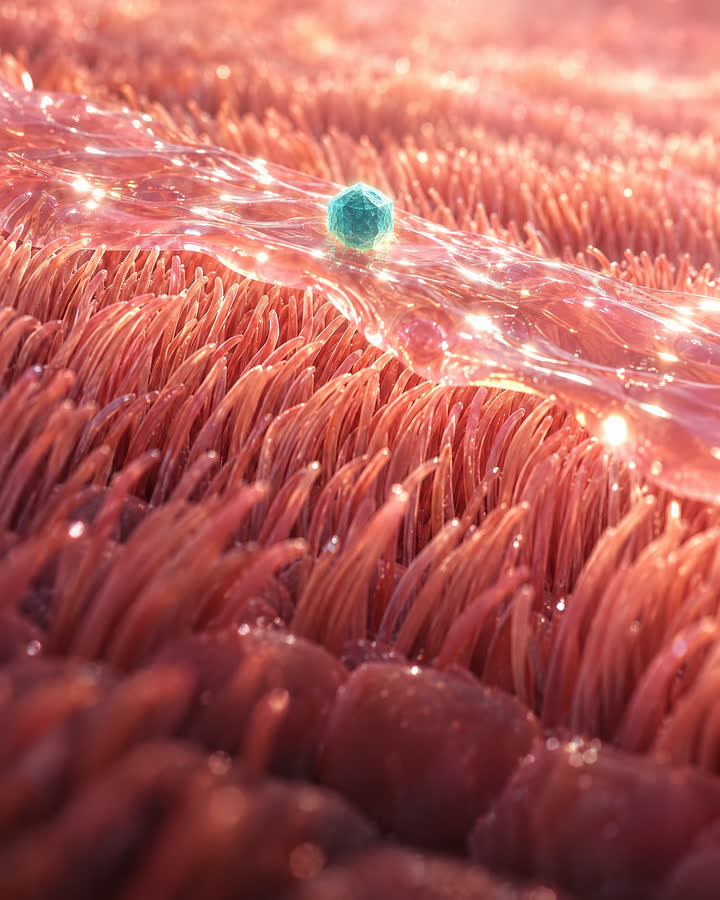
  3. AI illustration: The lining inside the nose is covered in cilia that move in waves.
    03 / 07

    The lining of the nose is waiting. Millions of tiny hairs, called cilia, sweep the mucus back – to wash invaders away.

    What you see: The lining inside the nose is covered in cilia that move in waves.
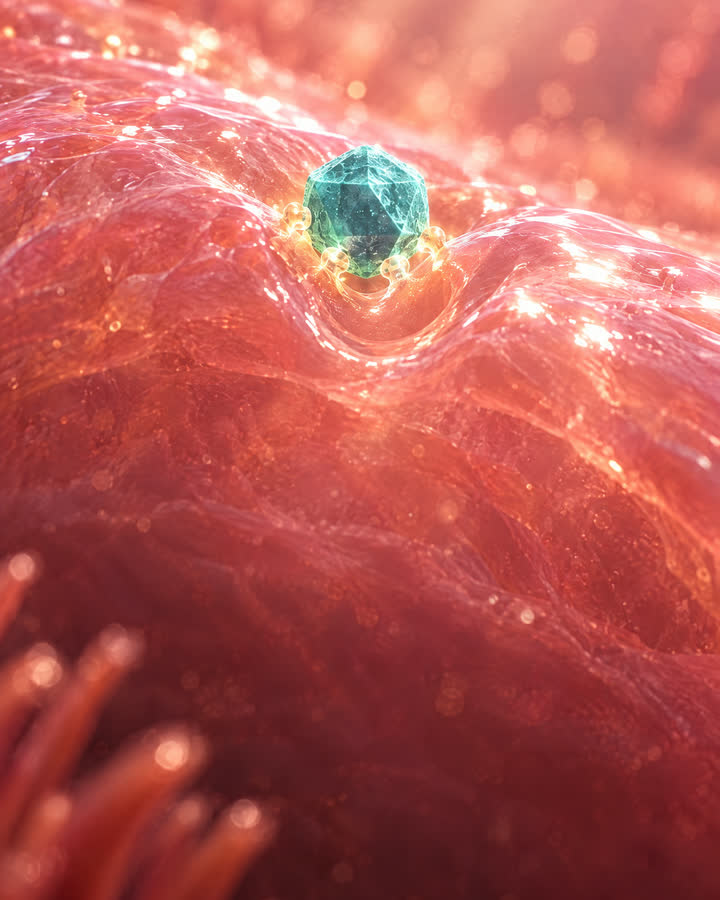
  4. AI illustration: The virus has latched onto a cell in the lining of the nose.
    04 / 07

    But the virus manages to latch onto a cell – and slips its genetic material inside.

    What you see: The virus has latched onto a cell in the lining of the nose.

    Simplified – see explanation ↓
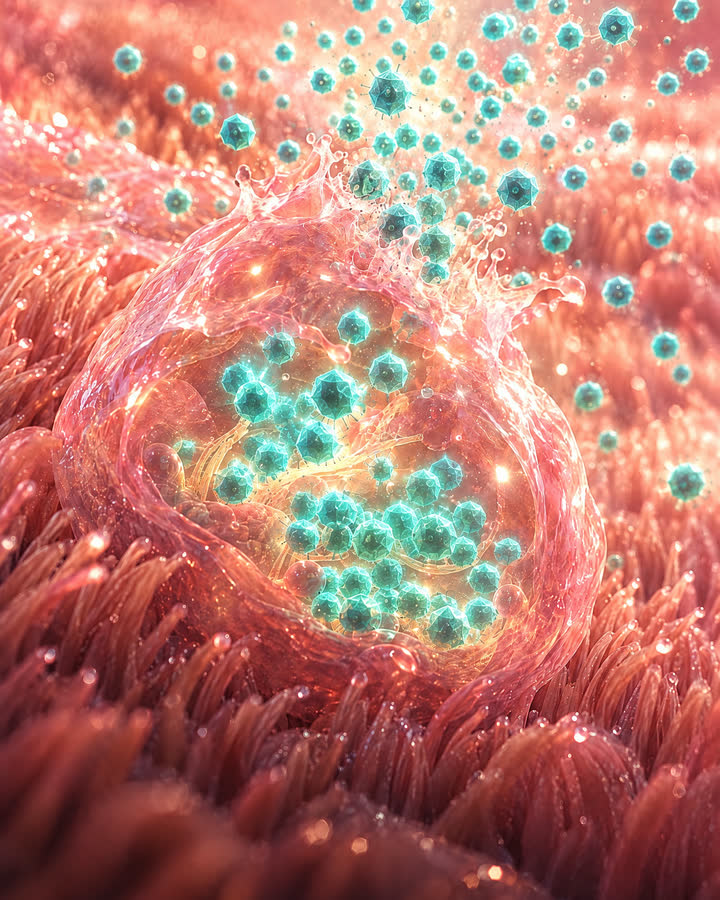
  5. AI illustration: The cell glows from within. Many new viruses have been made and are released.
    05 / 07

    Now the cell becomes a virus factory. Hundreds of new viruses are made – and spread on.

    What you see: The cell glows from within. Many new viruses have been made and are released.

    Simplified – see explanation ↓
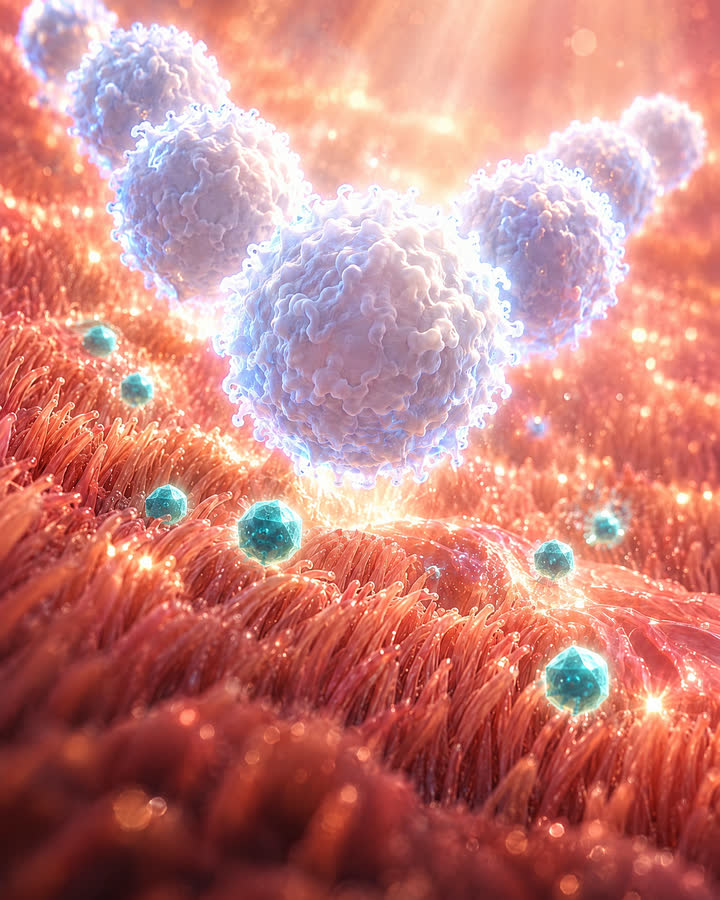
  6. AI illustration: Large white blood cells (the immune system) move in on the viruses.
    06 / 07

    Then the body fights back. White blood cells move in. The fever and the stuffy nose are your immune system at work – not the virus.

    What you see: Large white blood cells (the immune system) move in on the viruses.

    Simplified – see explanation ↓

  7. AI illustration: A virus and an antibiotic capsule in the dark. The capsule drifts past without affecting the virus.
    07 / 07

    That's why antibiotics don't help. They attack bacteria, not viruses.

    What you see: A virus and an antibiotic capsule in the dark. The capsule drifts past without affecting the virus.

02 · The myth

Antibiotics don't work against colds

Many believe

Antibiotics will make me better faster.

Why many believe it

A cold can bring fever, a blocked nose and yellow or green mucus. Then it can feel like something that needs medicine.

What is right

Colds are caused by viruses, and antibiotics only work against bacteria. Antibiotics won't make you better faster, but they can cause side effects. Unnecessary use also makes bacteria more likely to become resistant (antibiotic resistance). Yellow or green mucus does not in itself mean there are bacteria.

03 · What you can do

What you can do yourself

  • Rest and drink plenty.
  • For a blocked nose, salt water in the nose or steam can help. Decongestant nasal sprays should only be used for a few days.
  • Over-the-counter pain and fever relief can ease the symptoms. It won’t make you better faster. Ask a pharmacist if you are unsure.
  • Wash your hands often, and cough and sneeze into your elbow, so you infect fewer people.
  • A cold usually clears up on its own in 7–10 days. The cough can last three weeks or more.

04 · See a doctor

Contact a doctor if …

  • You have severe trouble breathing, chest pain lasting more than five minutes, or become confused or hard to wake – call 113 in Norway or your local emergency number.
  • You get much worse quickly, develop laboured or fast breathing, or feel very unwell – call the out-of-hours medical service (legevakt, 116 117 in Norway) or your local urgent care service.
  • You have had a fever for more than three days, or get ill again after you were getting better – contact your GP (regular doctor).
  • You get severe pain in the ear, in the face or around the eyes – contact your GP (regular doctor).
  • You are still ill after two weeks – contact your GP (regular doctor).

In children

  • Your baby is younger than six months and has a fever – call the out-of-hours medical service (legevakt, 116 117 in Norway) or your local urgent care service.
  • Your child is struggling to breathe, cannot drink, or is peeing much less often than usual – call the out-of-hours medical service (legevakt, 116 117 in Norway) or your local urgent care service.
  • Your child is limp and very unwell, or responds to you less than usual – call the out-of-hours medical service (legevakt, 116 117 in Norway) or your local urgent care service.
  • Your child has earache, or a fever for more than three days – contact your GP (regular doctor).

This is general advice. If you are unsure, contact an out-of-hours doctor.

05 · Simplified

Simplified illustration – not to scale

The film is made with AI and shows the body more simply than it is. This is what we simplified:

  • Viruses are shown as teal spheres. Real cold viruses are much smaller than cells and cannot be seen in an ordinary microscope.
  • How the virus gets into the cell is simplified. It latches onto the cell and is taken in inside a tiny bubble before its genetic material is released.
  • It takes several hours from the virus entering the cell until new viruses are released. The film shows it in a few seconds.
  • Many kinds of cells and substances in the immune system work together. The film shows them as a few large white blood cells.

06 · Sources

Sources and review

Reviewed by a Norwegian GP

Finished film reviewed 29 Oct 2026 · Version 2

What does reviewed mean?

  1. Helsenorge (Norwegian health portal): Forkjølelse
  2. Norsk Helseinformatikk (NHI.no): Forkjølelse
  3. Norwegian Institute of Public Health (FHI): Rhinovirusinfeksjon – veileder for helsepersonell
  4. Norwegian Institute of Public Health (FHI): Antibiotikaresistens
  5. Helsenorge (Norwegian health portal): Ring legevakten på 116 117 for øyeblikkelig hjelp
Versions and corrections
  • 27 Oct 2026 – v2: The virus is shown without spikes, like a real rhinovirus, and the film shows how it is taken into the cell.

General health information – not a substitute for a medical examination.

Found a mistake? Write to dicta@odkdigital.no. Do not send information about your own or anyone else's health.

That's why antibiotics don't help.

They attack bacteria,

Reviewed by a Norwegian GP

Dicta – The inside story