

Acutely ill? Call 113 in Norway. Out-of-hours service: 116 117.

Fever

Why do you freeze when you're hot?

Reviewed by a Norwegian GP 29 Oct 2026

Made with AI · Simplified illustration – not to scale

The key point

Fever isn't the illness. It's your body fighting back.

In short

  • When the immune system finds viruses or bacteria, it releases signal molecules into the blood.
  • And the thermostat is turned up. Suddenly 37 degrees feels too cold.
  • The heat helps the immune system work – and may make life harder for some viruses and bacteria.
Norsk versjon

More films

2 films · more on the way

See all
Headache and migraine

Why does your head hurt so much?

In production

01 · Scenes

Come inside – the film scene by scene

Here is the whole film as text and pictures.

Colours in the film

  • Orange and red: heat and activity
  • Golden particles: signal molecules
  • White glowing cells: white blood cells
  • Teal spheres: viruses

The colours are an artistic device, not measurements.

  1. AI illustration: A fictional woman sits under a blanket holding a thermometer.
    01 / 08

    You're freezing.
    But your temperature is 39 degrees Celsius.
    How does that make sense?

    What you see: A fictional woman sits under a blanket holding a thermometer.
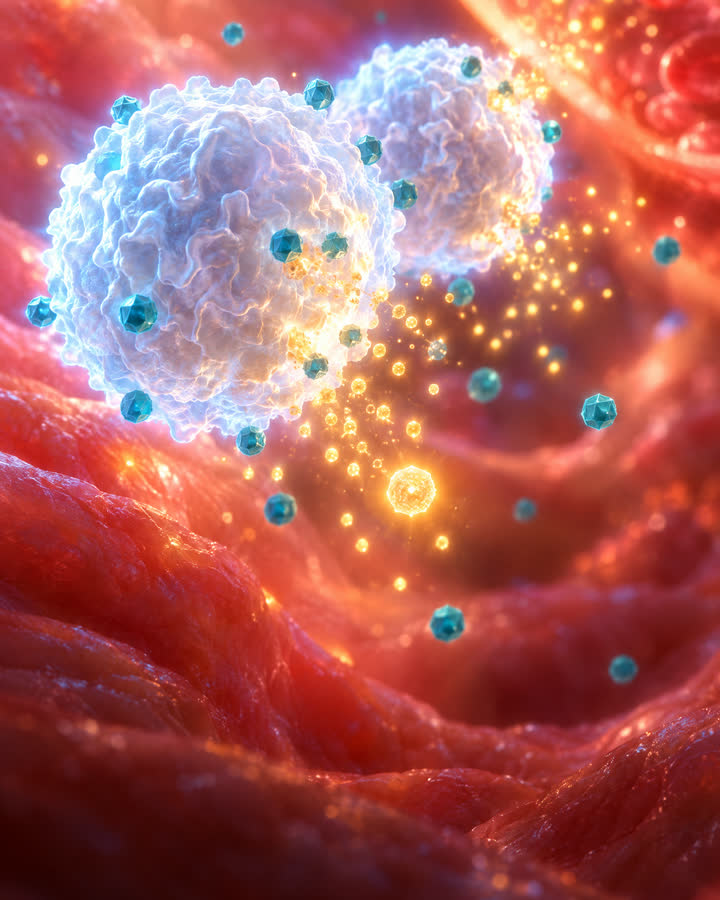
  2. AI illustration: Inside the lining: white blood cells (the immune system) meet viruses and release golden signal molecules.
    02 / 08

    When the immune system finds viruses or bacteria, it releases signal molecules into the blood.

    What you see: Inside the lining: white blood cells (the immune system) meet viruses and release golden signal molecules.

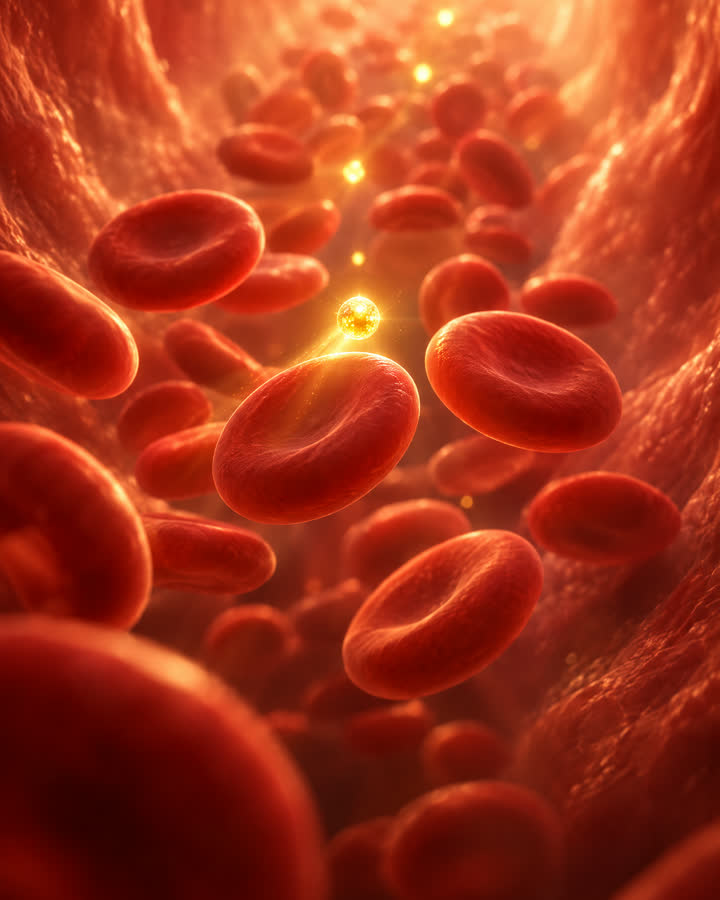
  3. AI illustration: A blood vessel seen like a tunnel. Red blood cells stream past, and one golden signal molecule travels towards the brain.
    03 / 08

    They trigger a small area deep in the brain –
    the body's thermostat.

    What you see: A blood vessel seen like a tunnel. Red blood cells stream past, and one golden signal molecule travels towards the brain.

    Simplified – see explanation ↓
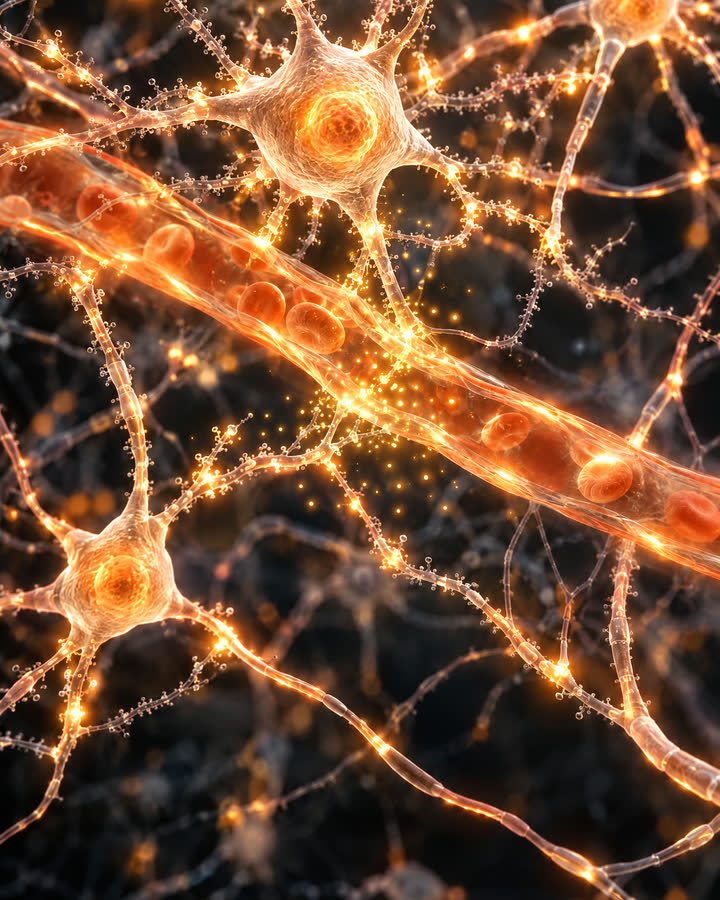
  4. AI illustration: Nerve cells deep in the brain, in the area that controls body temperature, light up when the signal arrives.
    04 / 08

    And the thermostat is turned up.
    Suddenly 37 degrees feels too cold.

    What you see: Nerve cells deep in the brain, in the area that controls body temperature, light up when the signal arrives.

    Simplified – see explanation ↓
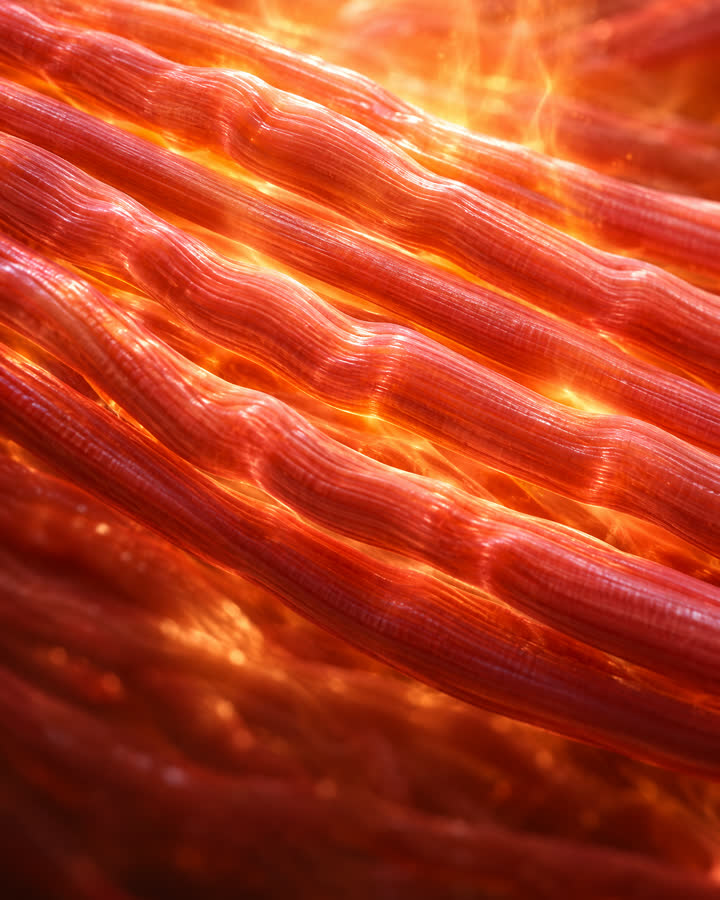
  5. AI illustration: Muscle fibres trembling quickly and giving off heat.
    05 / 08

    That's why you shiver and freeze:
    the body makes heat and holds on to it, until it reaches the new temperature.

    What you see: Muscle fibres trembling quickly and giving off heat.
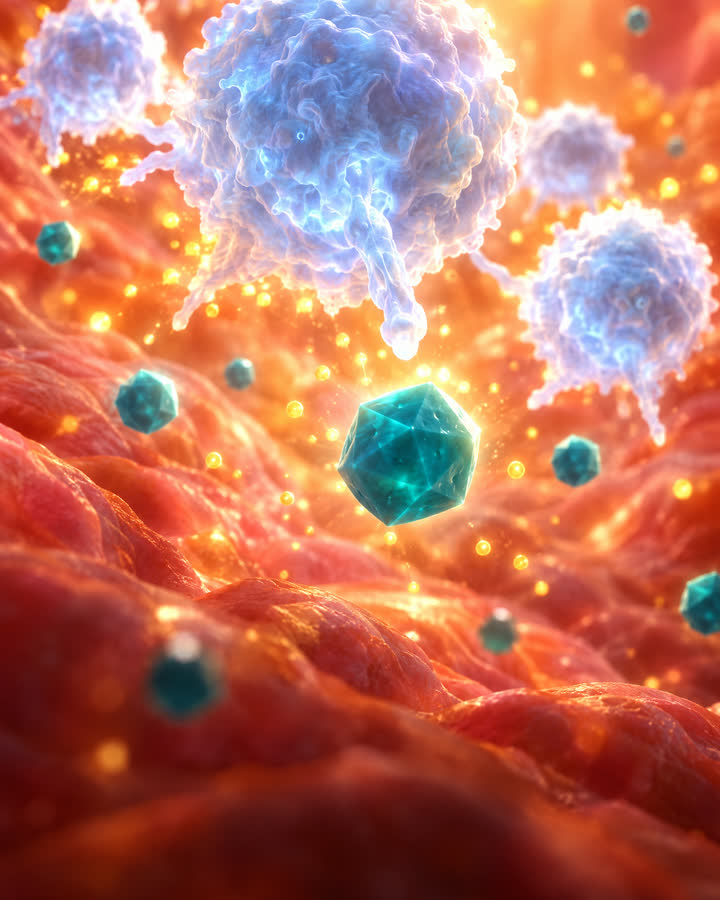
  6. AI illustration: White blood cells at full speed in the warm tissue, hunting the viruses (teal).
    06 / 08

    The heat helps the immune system work –
    and may make life harder for some viruses and bacteria.

    What you see: White blood cells at full speed in the warm tissue, hunting the viruses (teal).

    Simplified – see explanation ↓

  7. AI illustration: The woman is asleep. A drop of sweat on her forehead shows the body releasing heat again.
    07 / 08

    Once the battle is won, the thermostat is turned down –
    and you sweat.

    What you see: The woman is asleep. A drop of sweat on her forehead shows the body releasing heat again.
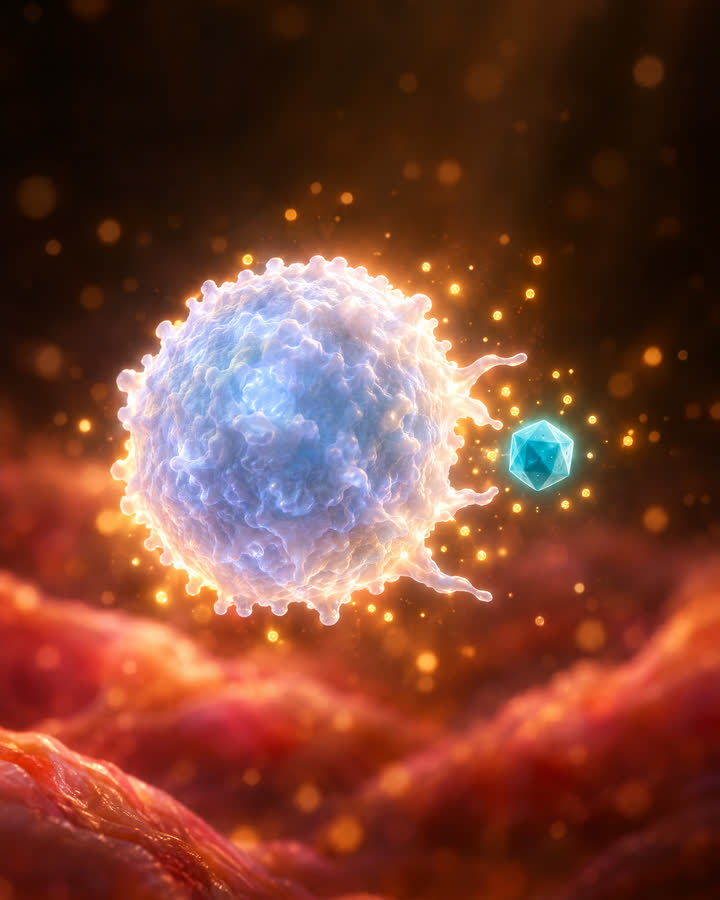
  8. AI illustration: A white blood cell in calm light.
    08 / 08

    Fever isn't the illness.
    It's your body fighting back.

    What you see: A white blood cell in calm light.

02 · The myth

Fever is the body's defence – not the illness itself

Many believe

The fever is the illness.

Why many believe it

The fever is what you feel most: you freeze, sweat and feel weak.

What is right

Fever is not an illness in itself. It is usually part of the body's defence against an infection, and the body itself turns up the temperature. The illness is what lies behind it, most often a virus.

03 · What you can do

What you can do yourself

  • Rest and take it easy.
  • Drink plenty. With a fever the body loses more fluid than usual.
  • Do not dress too warmly, but avoid getting cold. A slightly cool room is good.

04 · See a doctor

Contact a doctor if …

  • You have severe trouble breathing, chest pain lasting more than five minutes, or become confused or hard to wake – call 113 in Norway or your local emergency number.
  • You have a fever and get small red-purple spots that do not fade when you press a glass against the skin, or a fever and a stiff neck – call 113 in Norway or your local emergency number.
  • You get much worse quickly, or feel limp and very unwell – call the out-of-hours medical service (legevakt, 116 117 in Norway) or your local urgent care service.
  • You have an infection and develop laboured breathing, a racing pulse or clammy skin – call the out-of-hours medical service (legevakt, 116 117 in Norway) or your local urgent care service straight away.
  • The fever has lasted more than three days and you still feel unwell – contact your GP (regular doctor).

In children

  • Your child has a fever and gets small red-purple spots that do not fade when you press a glass against the skin, or has a fever and a stiff neck – call 113 in Norway or your local emergency number.
  • Your child has a seizure for the first time, or a seizure lasts more than five minutes, is stronger on one side of the body or comes back within 24 hours – call 113 in Norway or your local emergency number.
  • Your baby is younger than six months and has a fever – call the out-of-hours medical service (legevakt, 116 117 in Norway) or your local urgent care service.
  • Your child is limp and very unwell, or responds to you less than usual – call the out-of-hours medical service (legevakt, 116 117 in Norway) or your local urgent care service.
  • Your child is struggling to breathe, cannot drink, or is peeing much less often than usual – call the out-of-hours medical service (legevakt, 116 117 in Norway) or your local urgent care service.
  • The fever has not come down after two to three days – contact your GP (regular doctor).

This is general advice. If you are unsure, contact an out-of-hours doctor.

05 · Simplified

Simplified illustration – not to scale

The film is made with AI and shows the body more simply than it is. This is what we simplified:

  • The signal molecules are shown as golden particles of light. In reality they are molecules far too small to see.
  • The «thermostat» is an image for a small area deep in the brain (the hypothalamus) that controls body temperature.
  • Blood vessels, cells and nerve cells are not shown at their true sizes relative to each other.
  • Viruses are shown as teal spheres. Real viruses are much smaller than blood cells.
  • That the heat makes life harder for viruses and bacteria is a theory. It is one of several possible explanations of why fever helps, and it is not certain how much it matters in humans.

06 · Sources

Sources and review

Reviewed by a Norwegian GP

Finished film reviewed 29 Oct 2026 · Version 3

What does reviewed mean?

  1. Helsenorge (Norwegian health portal): Feber hos barn
  2. Norwegian Electronic Medical Handbook (NEL), patient information: Feber hos større barn og voksne - hva kan årsaken være?
  3. Norwegian Institute of Public Health (FHI): Når barnet ditt har feber
  4. Helsenorge (Norwegian health portal): Ring legevakten på 116 117 for øyeblikkelig hjelp
  5. Helsenorge (Norwegian health portal): Hjernehinnebetennelse og blodforgiftning ved meningokokksykdom
  6. Helsenorge (Norwegian health portal): Feberkrampar hos barn
Versions and corrections
  • 28 Oct 2026 – v2: Line 6 made more cautious after a source check: that the heat makes life harder for viruses and bacteria is a theory.
  • 29 Oct 2026 – v3: English voice re-recorded: the numbers were read in Norwegian.

General health information – not a substitute for a medical examination.

Found a mistake? Write to dicta@odkdigital.no. Do not send information about your own or anyone else's health.

Fever isn't the illness.

It's your body fighting back.

Reviewed by a Norwegian GP

Dicta – The inside story