

Acutely ill? Call 113 in Norway. Out-of-hours service: 116 117.

Headache and migraine

Why does your head hurt so much?

Reviewed by a Norwegian GP 29 Oct 2026

Made with AI · Simplified medical illustration – not to scale

The key point

Headaches are usually harmless. New or troubling headache? See your doctor.

In short

  • Your brain itself can't feel pain. So why does your head hurt so much?
  • Migraine is a neurological disease. In about one in four, a slow wave across the brain's surface causes visual disturbances: aura.
  • Sudden, extreme headache? Paralysis, confusion – or fever and a stiff neck? Call emergency services.
Norsk versjon

More films

3 films · more on the way

See all

01 · Scenes

Come inside – the film scene by scene

Here is the whole film as text and pictures.

Colours in the film

  • Blue: the brain at rest
  • Orange and red: active pain nerves
  • Golden particles: signal molecules
  • White zigzag light: aura

The colours are an artistic device, not measurements.

  1. AI illustration: A fictional man holds his temple. The skin turns transparent, showing the skull, the membranes and the blue brain.
    01 / 08

    Your brain itself can't feel pain.
    So why does your head hurt so much?

    What you see: A fictional man holds his temple. The skin turns transparent, showing the skull, the membranes and the blue brain.

    Simplified – see explanation ↓
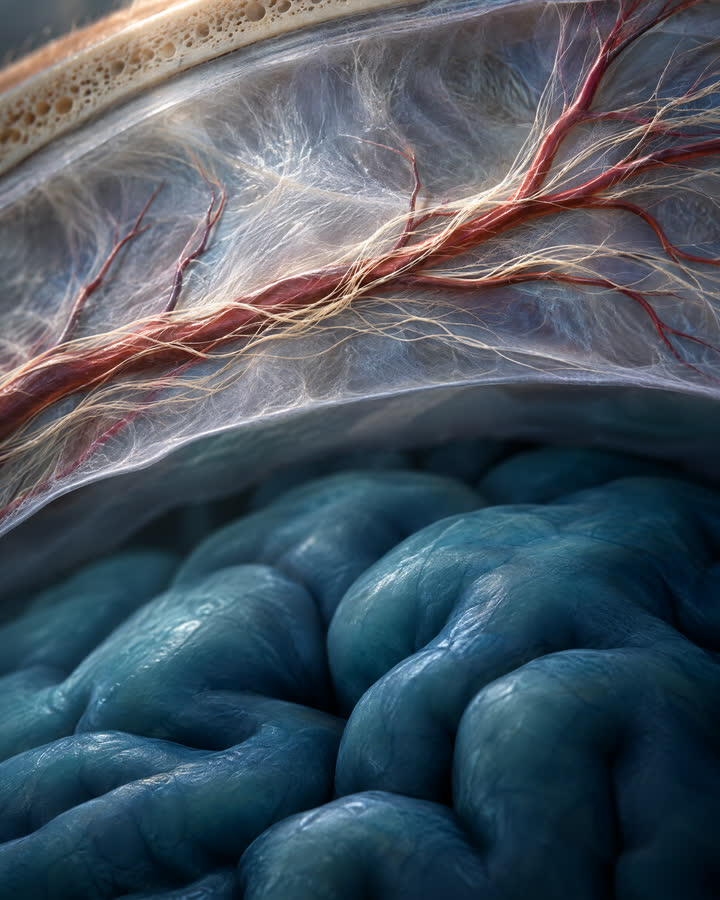
  2. AI illustration: The tough outer membrane with a blood vessel and fine nerve fibres glowing orange. The brain below stays blue and calm.
    02 / 08

    The pain can come from the membranes around the brain, blood vessels, nerves and muscles in the head and neck.

    What you see: The tough outer membrane with a blood vessel and fine nerve fibres glowing orange. The brain below stays blue and calm.

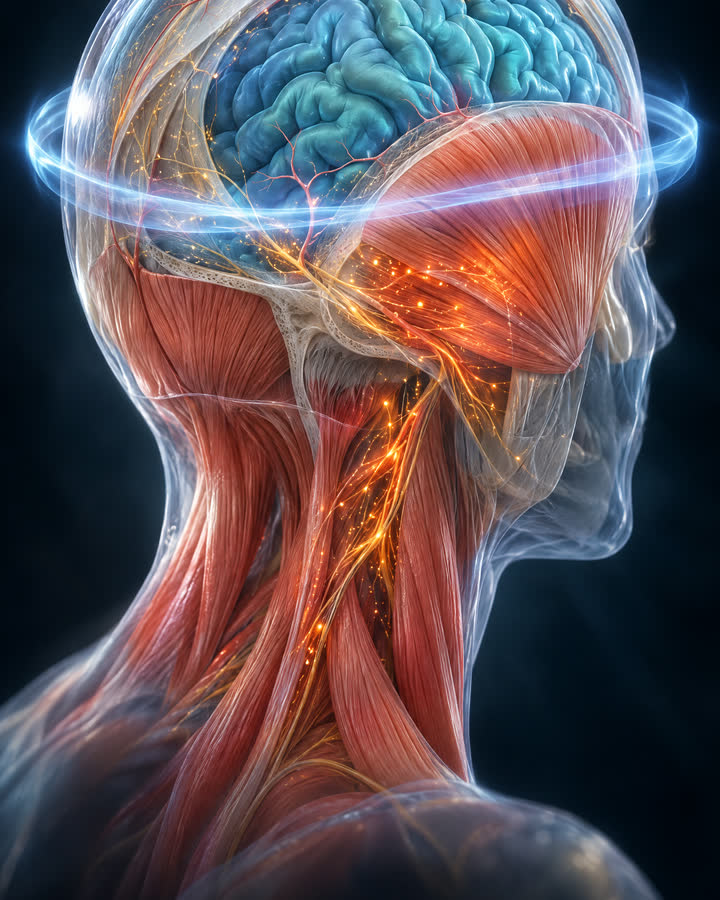
  3. AI illustration: A half-transparent head and neck with the muscles visible, and a soft, glowing band around the head.
    03 / 08

    A tension headache often feels like a tight band.
    Stress and poor sleep can contribute –
    the causes are complex.

    What you see: A half-transparent head and neck with the muscles visible, and a soft, glowing band around the head.

    Simplified – see explanation ↓
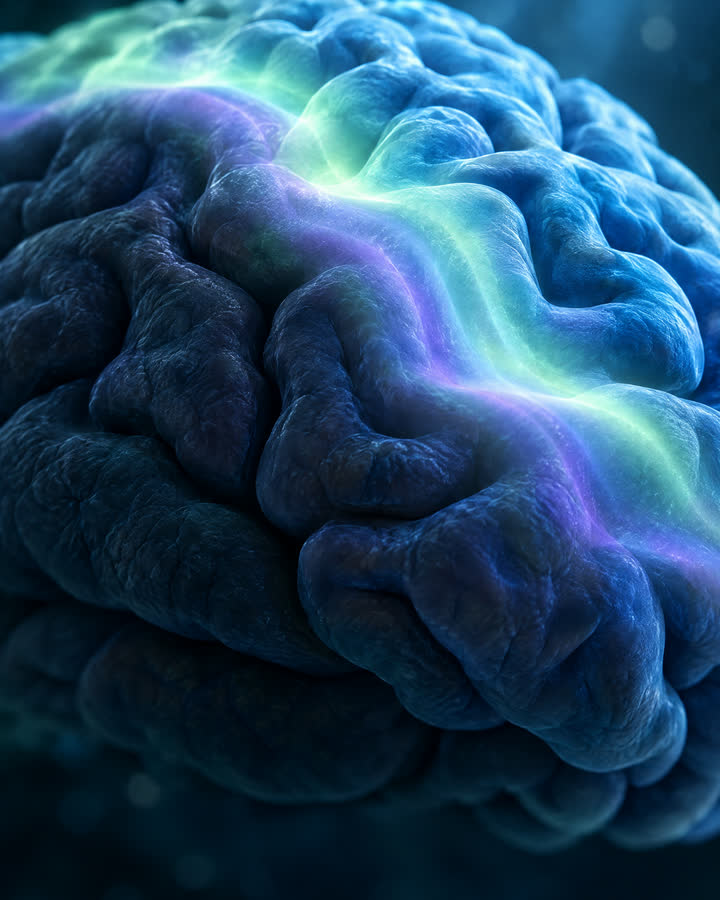
  4. AI illustration: A slow wave glides across the surface of the brain. Then we see through the eyes of a person with aura: a shimmering zigzag arc in the field of vision.
    04 / 08

    Migraine is a neurological disease.
    In about one in four, a slow wave across the brain's surface causes visual disturbances:
    aura.

    What you see: A slow wave glides across the surface of the brain. Then we see through the eyes of a person with aura: a shimmering zigzag arc in the field of vision.

    Simplified – see explanation ↓
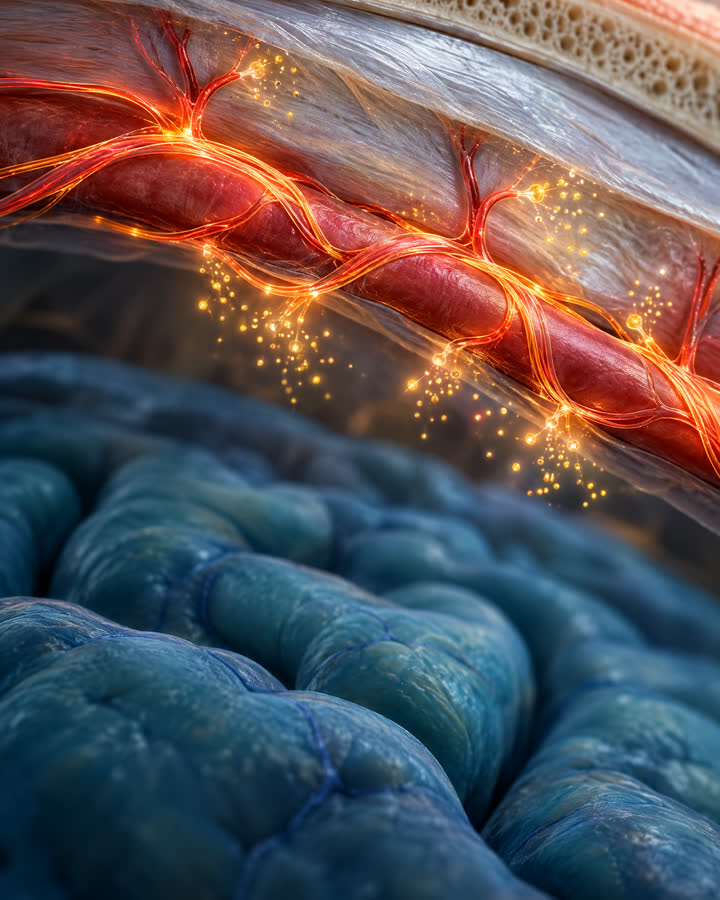
  5. AI illustration: Pain nerves around a blood vessel in the membrane glow red and orange, and golden particles are released.
    05 / 08

    In migraine, pain nerves in the membranes are activated, and signal molecules amplify the pain.

    What you see: Pain nerves around a blood vessel in the membrane glow red and orange, and golden particles are released.

    Simplified – see explanation ↓
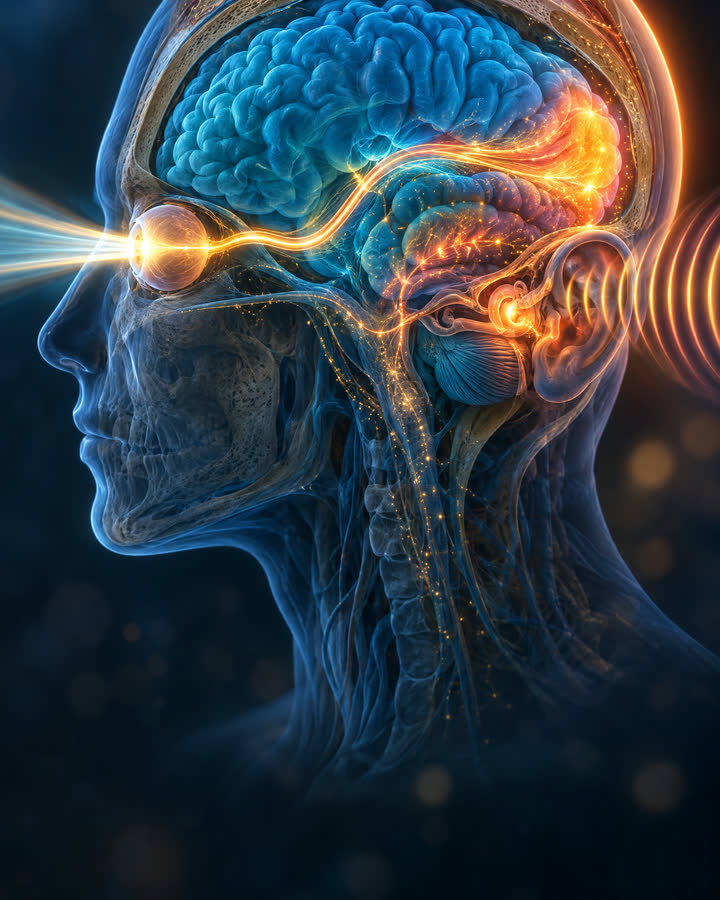
  6. AI illustration: Light enters through the eye and sound through the ear, and the areas of the brain that receive them glow brighter.

    06 / 08

    The pain can throb,
    and the brain often becomes extra sensitive to light and sound.

    What you see: Light enters through the eye and sound through the ear, and the areas of the brain that receive them glow brighter.

  7. AI illustration: Three warning signs, one image each: sudden, extreme headache, paralysis and confusion, and fever with a stiff neck.
    07 / 08

    Sudden, extreme headache?
    Paralysis, confusion –
    or fever and a stiff neck?
    Call emergency services.

    What you see: Three warning signs, one image each: sudden, extreme headache, paralysis and confusion, and fever with a stiff neck.

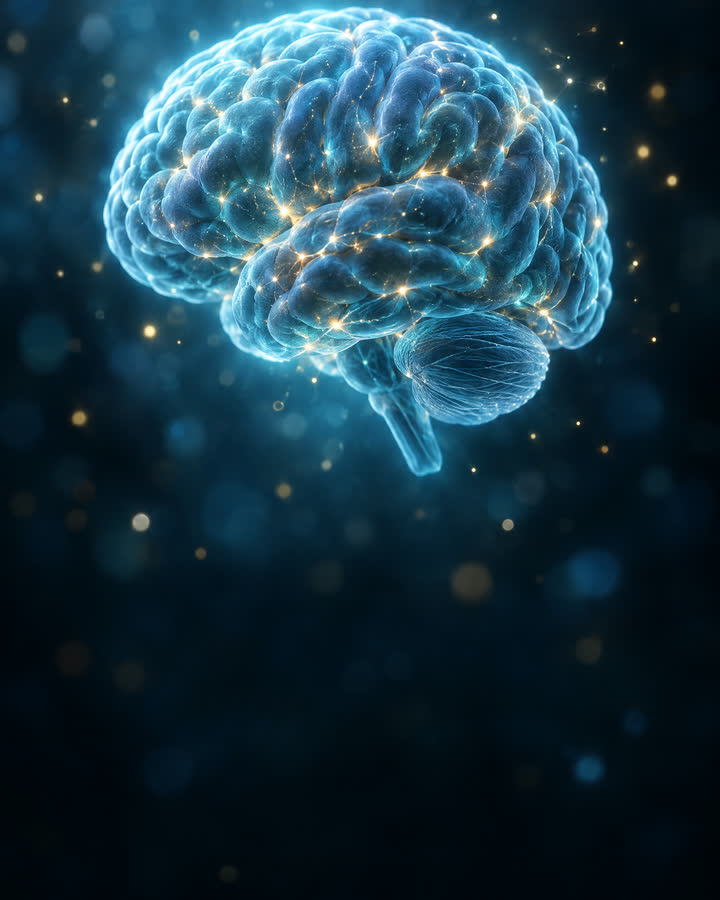
  8. AI illustration: The camera slowly pulls back from a blue brain.
    08 / 08

    Headaches are usually harmless.

    What you see: The camera slowly pulls back from a blue brain.

02 · The myth

The brain itself feels no pain

Many believe

When your head hurts, it's your brain that hurts.

Why many believe it

The pain is felt inside the head, so it's easy to think it comes from the brain.

What is right

Brain tissue has no pain sensors. The pain comes from the membranes around the brain, blood vessels, nerves and muscles in the head and neck. Still, it is the brain that interprets the pain, and in migraine it becomes extra sensitive.

03 · What you can do

What you can do yourself

  • Regular sleep, regular meals and enough to drink can make headaches less frequent.
  • Physical activity and relaxation can help with tension headaches.
  • During a migraine attack, many people find it helps to rest in a dark, quiet room.
  • Over-the-counter painkillers can help. If you use them on more than half the days of the month, they can cause headaches themselves. Talk to your GP.
  • A headache diary can help you and your doctor spot patterns.

04 · See a doctor

Contact a doctor if …

  • You get a sudden, extreme headache – the worst you have ever had – call 113 in Norway or your local emergency number.
  • The headache comes with paralysis, a drooping mouth, trouble speaking or confusion – call 113 in Norway or your local emergency number.
  • You have a headache with fever and a stiff neck, or small red-purple spots that do not fade when you press a glass against the skin – call 113 in Norway or your local emergency number.
  • You get a headache after a blow to the head and get worse, vomit or become unusually tired – call the out-of-hours medical service (legevakt, 116 117 in Norway) or your local urgent care service.
  • You get a new headache that is different from before, or one that keeps getting worse – contact your GP (regular doctor).
  • The headache wakes you at night, or you have headaches on many days a month – contact your GP (regular doctor).

In children

  • Your child has a headache with fever and a stiff neck, or is limp and hard to get in contact with – call 113 in Norway or your local emergency number.
  • Your child has a headache that keeps getting worse, wakes them at night or comes with vomiting in the morning – contact your GP (regular doctor).

This is general advice. If you are unsure, contact an out-of-hours doctor.

05 · Simplified

Simplified medical illustration – not to scale

The film is made with AI and shows the body more simply than it is. This is what we simplified:

  • The skull, membranes and brain are shown as layers. They are not shown at their real thickness.
  • The band around the head shows how a tension headache feels, not what causes it.
  • The wave across the surface of the brain is the likely explanation for aura. It does not apply to all attacks, and most people with migraine do not have aura.
  • How the wave is linked to the pain is not known. That is why the pain nerves are shown in a separate image.
  • Signal molecules are shown as golden particles. In reality they are molecules far too small to see.

06 · Sources

Sources and review

Reviewed by a Norwegian GP

Finished film reviewed 29 Oct 2026 · Version 1

What does reviewed mean?

  1. Helsenorge (Norwegian health portal): Vondt i hodet (hodepine)
  2. Helsenorge (Norwegian health portal): Migrene
  3. Helsenorge (Norwegian health portal): Spenningshodepine
  4. Norsk Helseinformatikk (NHI.no): Medikamentoverforbruks-hodepine (MOH)
  5. International Headache Society: The International Classification of Headache Disorders, 3rd edition (ICHD-3)
  6. Helsenorge (Norwegian health portal): Ring legevakten på 116 117 for øyeblikkelig hjelp
Versions and corrections
  • 29 Oct 2026 – v1: First version.

General health information – not a substitute for a medical examination.

Found a mistake? Write to dicta@odkdigital.no. Do not send information about your own or anyone else's health.

Headaches are usually harmless.

New or troubling headache? See your doctor.

Reviewed by a Norwegian GP

Dicta – The inside story